

What Are the Three Types of Property? Residential, Commercial & Industrial Explained
Real estate is widely considered a valuable investment option for creating long-term wealth and achieving financial security. However, before purchasing or investing in property, it is important to understand the different categories of real estate and how they work. Each property type serves a different purpose, attracts different buyers, and offers unique investment opportunities.
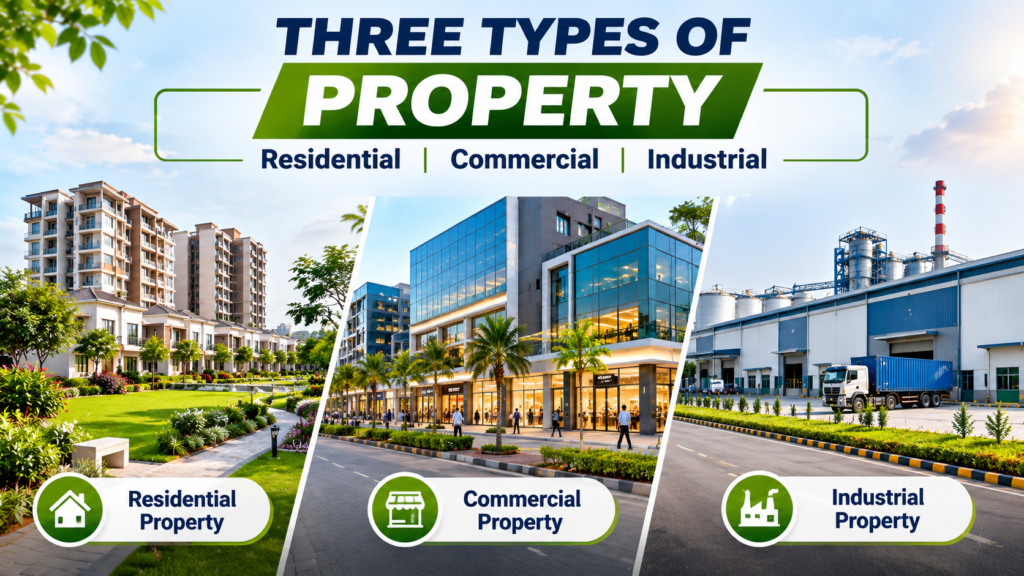
If you are new to the real estate market, understanding the three types of property can help you make better decisions. Generally, real estate is divided into three major categories: residential property, commercial property, and industrial property.
Whether you are planning to purchase your first home, invest in rental properties, or explore business opportunities, knowing the differences between these categories can help you identify the right investment according to your financial goals.
In this guide, we will explore the three major property categories, their features, benefits, examples, and investment potential.
Understanding the Three Types of Property in Real Estate
Real estate includes different types of land and buildings used for residential, business, and industrial purposes. Each category has its own characteristics, ownership requirements, and market demand.
The three types of property commonly discussed in real estate are:
- Residential Property
- Commercial Property
- Industrial Property
Let’s understand each category in detail.
1. Residential Property: Property Designed for Living
Residential property refers to land or buildings primarily designed for people to live in. It is one of the most familiar categories of real estate because housing is a basic requirement for individuals and families.
Residential properties are available in different sizes, designs, locations, and price ranges. Buyers can choose a property depending on their family requirements, lifestyle, and financial budget.
Common Examples of Residential Properties
Some popular residential property types include:
- Apartments and Flats: Individual residential units located within multi-storey buildings.
- Independent Houses: Standalone homes offering greater privacy and personal space.
- Residential Plots: Land purchased for constructing an independent house.
- Villas and Bungalows: Spacious homes generally featuring premium facilities and private outdoor areas.
- Duplex Houses: Residential properties designed across two connected floors.
- Row Houses: Individual homes constructed in a connected series of houses.
Benefits of Investing in Residential Property
Residential real estate offers several advantages for homebuyers and investors.
- Regular Rental Income
Owners can generate rental income by leasing their residential properties to families, working professionals, and students.
- Long-Term Ownership
Residential property can provide long-term asset ownership and may offer capital appreciation depending on location and market conditions.
- Personal Use
Unlike many other investments, residential property can fulfil an immediate personal requirement by providing a place to live.
- Different Budget Options
From affordable apartments to premium villas and residential plots, buyers can explore options according to their financial capacity.
Who Should Invest in Residential Property?
Residential properties may be suitable for:
- First-time homebuyers.
- Families looking for independent houses.
- Investors interested in rental income.
- Individuals purchasing land for future construction.
- Buyers seeking long-term property ownership.
2. Commercial Property: Property Used for Business Activities
Commercial property refers to buildings and spaces primarily used for business and income-generating activities. These properties support businesses, retail operations, professional services, and other commercial activities.
Commercial real estate is an important part of urban development because it provides spaces for companies, shops, offices, and service providers.
Common Examples of Commercial Properties
The following are some common examples:
- Office Spaces: Buildings or units used by companies, startups, and professional organisations.
- Retail Shops: Commercial spaces used for selling products and providing services.
- Shopping Malls: Large commercial complexes containing multiple retail outlets, restaurants, and entertainment facilities.
- Showrooms: Spaces used to display and sell products such as vehicles, electronics, and furniture.
- Hotels: Commercial establishments offering accommodation and hospitality services.
- Commercial Complexes: Buildings containing shops, offices, and other business establishments.
Benefits of Investing in Commercial Property
Commercial real estate can provide attractive opportunities for investors when the property is located in a suitable business area.
- Rental Income Opportunities
Commercial spaces can generate rental income from businesses operating under lease agreements.
- Business Demand
Properties near commercial centres, shopping districts, and business hubs may attract companies looking for accessible locations.
- Long-Term Leasing
Some commercial properties are leased through longer-term agreements, which can provide greater rental visibility.
- Business Location Advantage
A strategically located commercial property can benefit from visibility, customer accessibility, and surrounding business activity.
Who Should Invest in Commercial Property?
Commercial properties may be suitable for:
- Business owners.
- Retail investors.
- Companies looking for office spaces.
- Investors interested in leasing commercial units.
- Individuals planning to establish shops or showrooms.
However, commercial investments require careful consideration of location, tenant demand, vacancy risk, maintenance costs, and lease conditions.
3. Industrial Property: Property Used for Manufacturing and Storage
Industrial property refers to land and buildings primarily used for manufacturing, production, warehousing, distribution, and logistics activities.
These properties support industries and businesses that require specialised infrastructure, larger spaces, and suitable transportation facilities.
Industrial real estate plays an important role in economic development by supporting manufacturing companies, supply chains, and logistics operations.
Common Examples of Industrial Properties
Some major examples include:
- Manufacturing Units: Facilities where products are manufactured or assembled.
- Warehouses: Buildings used for storing raw materials, finished products, and inventory.
- Industrial Sheds: Structures designed for manufacturing, workshops, and industrial operations.
- Distribution Centres: Facilities used for managing and distributing goods.
- Logistics Parks: Developments supporting transportation, storage, and supply chain operations.
- Factory Buildings: Properties designed for specialised industrial production.
Benefits of Investing in Industrial Property
Industrial real estate can offer opportunities for investors interested in business-oriented property markets.
- Demand from Manufacturing Businesses
Industrial growth can create demand for factories, warehouses, and production facilities.
- Logistics and Storage Requirements
The expansion of e-commerce, transportation, and distribution networks can increase the requirement for suitable storage spaces.
- Long-Term Business Leases
Certain industrial properties may attract businesses looking for long-term operational locations.
- Strategic Location Benefits
Properties near highways, industrial corridors, transportation facilities, and logistics hubs may be attractive to businesses.
Who Should Invest in Industrial Property?
Industrial properties may be suitable for:
- Manufacturing companies.
- Warehouse operators.
- Logistics businesses.
- Industrial developers.
- Investors interested in leasing industrial facilities.
Before investing, buyers should verify industrial zoning, environmental requirements, infrastructure availability, and permitted activities.
Difference Between Residential, Commercial and Industrial Property
Understanding the differences between the three types of property makes it easier to identify which category matches your investment objectives.
Here is a simple comparison:
| Factors | Residential | Commercial | Industrial |
| Main Purpose | Living | Business activities | Manufacturing and storage |
| Examples | Flats, houses, plots | Shops, offices, malls | Factories, warehouses |
| Main Users | Families and individuals | Businesses and retailers | Manufacturers and logistics companies |
| Income Source | Residential rent | Commercial rent | Industrial leases |
| Location Preference | Residential neighbourhoods | Business districts | Industrial zones |
| Investment Focus | Housing demand | Business demand | Industrial and logistics demand |
Each category has different opportunities and risks. Therefore, buyers should evaluate the property according to their investment budget, financial objectives, and preferred ownership period.
Which Type of Property Is Best for Investment?
There is no single answer because the right investment depends on your financial goals, available capital, and risk tolerance.
Here are some factors to consider before choosing a property.
Residential Property for First-Time Buyers
If your primary objective is to purchase a home or secure a property for your family, residential real estate can be a practical option.
Apartments, independent houses, and residential plots provide different ownership opportunities.
Commercial Property for Business and Rental Income
If you are interested in purchasing property for business purposes or rental income, commercial real estate may be worth exploring.
However, carefully evaluate business activity, tenant demand, and the property’s accessibility.
Industrial Property for Business Expansion
Industrial real estate may be suitable for companies that require manufacturing units, warehouses, or distribution facilities.
Investors should consider industrial demand, transportation access, zoning, and infrastructure before purchasing.
Important Factors to Check Before Buying Any Property
Regardless of which category you choose, proper research is essential before completing a property transaction.
Consider the following factors:
- Location: Check connectivity, surrounding development, and access to essential facilities.
- Legal Documents: Verify ownership records, title history, and applicable approvals.
- Property Purpose: Confirm that the property is legally permitted for your intended use.
- Market Value: Compare prices with similar properties in the surrounding area.
- Infrastructure: Evaluate roads, electricity, water supply, drainage, and other facilities.
- Future Demand: Research employment opportunities, business activity, and residential requirements.
- Additional Costs: Consider stamp duty, registration, maintenance, taxes, and other applicable expenses.
For land purchases, also examine the zoning classification, layout permissions, access rights, and applicable land-use regulations.
Understanding real estate categories is the first step towards making informed property decisions. Residential, commercial, and industrial properties serve different purposes and offer different investment opportunities.
The three types of property each have their own advantages, depending on whether you want a home, business space, rental income, or an industrial facility.
Before investing, carefully evaluate your budget, property requirements, location, legal documentation, and long-term objectives. A well-researched decision can help you select a property that aligns with your financial plans and future needs.
Remember, successful real estate investment is not just about purchasing a property. It is about understanding its purpose, evaluating its potential, and making a decision based on reliable information.