
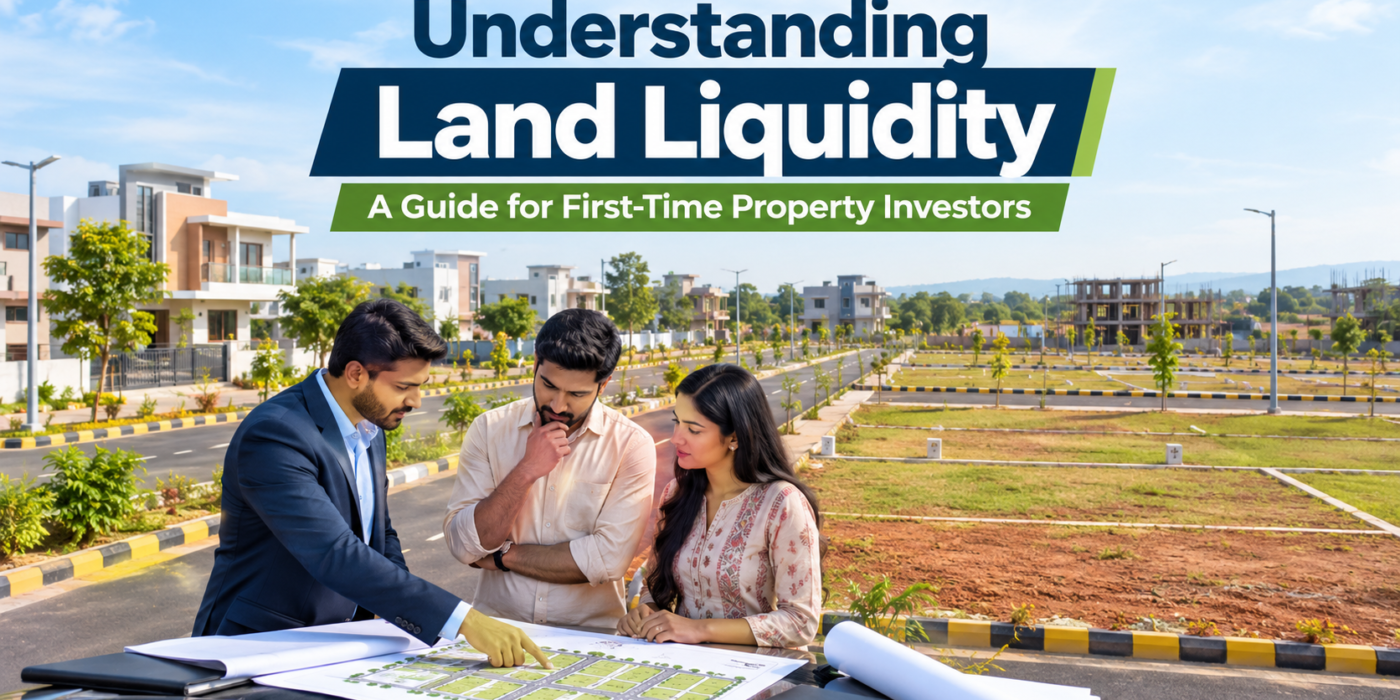
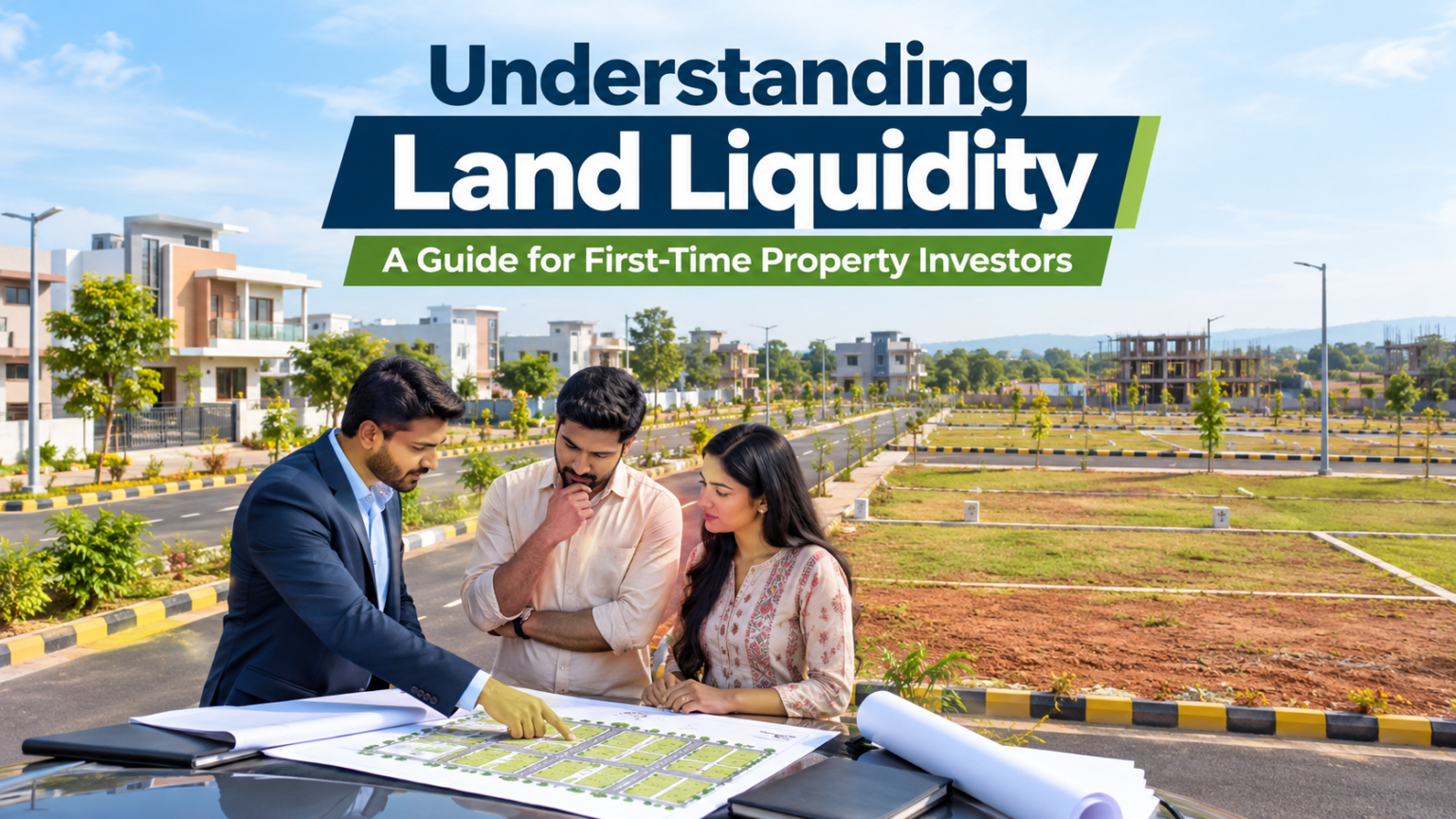
What First-Time Property Investors Should Know About Land Liquidity
Investing in land can be an appealing option for people looking to enter the real estate market. However, buying a plot involves more than comparing prices and estimating future appreciation. Investors also need to understand how easily they can sell the property when they need money or want to move their investment elsewhere. This is where land liquidity becomes important.
For first-time property investors in Nagpur, understanding land liquidity can help set realistic expectations, choose suitable properties, and avoid financial pressure in the future. A plot may have attractive long-term potential but still take months or longer to find a suitable buyer.
In this guide, we explain what land liquidity means, which factors affect resale demand, how to assess a plot before purchasing it, and what beginners can do to manage the risks associated with investing in land.
What Is Land Liquidity in Real Estate?
Land liquidity refers to how easily a plot can be converted into cash through a sale without making a substantial price reduction to attract a buyer.
A property with strong resale demand may attract enquiries from several potential buyers, while a plot in a less active market may remain unsold for an extended period. The time required to complete a sale can depend on the location, asking price, legal status, accessibility, and prevailing market conditions.
Unlike money held in a bank account, land cannot usually be converted into cash immediately. Even when a property has appreciated in value, the owner must find a buyer, negotiate the terms, complete the necessary documentation, and transfer ownership.
For beginners, understanding this distinction is essential. An increase in a property’s estimated market value does not necessarily mean that the owner can sell it quickly.
Why Land Liquidity Matters for First-Time Investors
First-time investors often concentrate on buying at an attractive price and holding the property until its value increases. Although these considerations matter, the ability to exit an investment is equally important.
1. Access to Funds When Needed
Unexpected expenses, business requirements, family commitments, or changes in financial priorities may create a need for cash.
If your investment is tied up in a plot that takes a long time to sell, you may not be able to access the money when required. You might also need to reconsider your asking price to attract serious buyers.
Before purchasing land, think about whether you can manage your financial responsibilities without depending on a quick resale.
2. Better Financial Planning
Understanding land liquidity helps you decide how much of your available capital you can reasonably allocate to property.
For example, investing most of your savings in a plot could leave you with limited funds for emergencies or other financial commitments. Maintaining an appropriate cash reserve can help reduce the pressure to sell the property at an unfavourable price.
3. Greater Flexibility in Investment Decisions
A property that attracts consistent buyer interest may give its owner more flexibility when planning a sale. However, resale demand can change with market conditions, so no plot should be considered immediately saleable.
Evaluating liquidity alongside potential appreciation can help you compare different properties more realistically.
Key Factors That Affect Land Liquidity
Several factors influence how easily a plot can be sold. Understanding these elements can help first-time investors evaluate properties before committing their money.
1. Location and Connectivity
Location is one of the most important considerations when assessing resale potential.
Plots with convenient access to major roads, established residential areas, workplaces, schools, healthcare facilities, and everyday services may appeal to a wider range of buyers.
In Nagpur, investors may research locations around Wardha Road, MIHAN, Jamtha, Besa, Beltarodi, Umred Road, and the Samruddhi Mahamarg corridor. However, these areas have different market conditions, infrastructure levels, and buyer profiles.
Instead of assuming that a location will automatically experience strong demand, investigate the specific property’s surroundings, access routes, nearby development, and actual resale activity.
2. Purchase Price Compared with Market Value
Even a well-located plot can be difficult to sell if it is priced substantially above comparable properties.
Before purchasing, compare the asking prices of similar plots in the same locality. Consider differences in plot size, road frontage, access, approvals, infrastructure, and development status.
Also distinguish between advertised prices and completed transactions. A high asking price does not necessarily reflect what buyers are willing to pay.
Buying at a reasonable price can give you greater flexibility when selling, although it cannot guarantee a quick transaction or a profit.
3. Legal Documentation and Approvals
Legal uncertainty can discourage prospective buyers and delay a property transaction.
Before purchasing land, verify the seller’s ownership, relevant title documents, permitted land use, applicable layout approvals, encumbrances, and legal access to the property.
Where applicable, check the relevant planning authority’s records and whether registration under real estate regulations is required.
Clear and consistent documentation can make it easier for a future buyer and their lender or legal adviser to evaluate the property. The exact requirements depend on the land and the nature of the transaction, so seek professional legal advice when necessary.
4. Road Access and Physical Accessibility
A plot’s practical accessibility can influence its appeal to buyers.
Properties with usable approach roads and convenient access may attract more interest than plots that are difficult to reach. In some locations, buyers may also be concerned about the condition of internal roads, drainage, electricity, water availability, and other infrastructure.
Visit the property in person rather than relying exclusively on photographs, maps, or promotional material. Confirm that the advertised access matches the actual conditions and relevant legal records.
5. Buyer Demand in the Local Market
A property’s resale prospects depend partly on the number and type of people interested in purchasing similar land.
For instance, a plot suitable for constructing a family home may appeal to end-users, while a larger parcel may attract a different group of buyers. The likely buyer pool can also depend on affordability, permitted use, and the level of development in the surrounding area.
Review recent property sales and consult experienced local real estate professionals to determine whether similar plots are attracting genuine buyer interest.
6. Plot Size, Shape, and Usability
The dimensions and layout of a plot can affect the number of potential buyers it suits.
A regularly shaped plot with practical dimensions may be easier for some buyers to evaluate for residential construction. Unusual boundaries, access limitations, or restrictions on development could reduce its appeal.
Before purchasing, establish whether the plot meets the needs of your intended buyer group and whether its permitted use aligns with those requirements.
Are Plots in Developing Areas More Difficult to Sell?
Plots in developing locations can offer opportunities, but their resale timelines may be less predictable than those of properties in established markets.
An emerging locality may have improving road connectivity, new commercial activity, or planned infrastructure. However, these developments do not automatically create immediate demand for every nearby plot.
Potential buyers may wait until infrastructure is operational, residential communities are established, or essential services become more accessible. This can affect how quickly an owner finds a buyer.
For investors exploring developing areas of Nagpur, consider the following:
- Is the approach road already usable?
- Are essential utilities available or realistically planned?
- Is there existing residential or commercial activity nearby?
- Are people purchasing and occupying properties in the locality?
- Are comparable plots being resold?
- Is the asking price supported by current market evidence?
- Can you afford to hold the property if selling takes longer than expected?
Evaluate infrastructure announcements carefully and distinguish between proposed projects, projects under construction, and facilities that are already operational.
How to Evaluate Land Liquidity Before Buying
First-time buyers can follow a step-by-step assessment to identify potential resale difficulties before investing in a property.
Step 1: Research Comparable Properties
Identify plots with similar characteristics in the same area. Compare their asking prices, legal status, accessibility, dimensions, and development conditions.
Where reliable information is available, investigate completed transactions and the approximate time properties took to sell. Online listings alone may not provide a complete picture of market demand.
Step 2: Understand the Likely Buyer Profile
Consider which types of buyers are most likely to be interested in purchasing the plot in the future.
Could it appeal to families planning to build a home, people looking for a second property, or investors seeking land? A clearer understanding of the likely buyer group can help you assess whether the property suits a meaningful segment of the market.
Step 3: Verify All Relevant Documents
Review the title, ownership records, applicable approvals, permitted land use, access rights, and other relevant documents before finalizing the purchase.
Properties with unresolved legal issues may be harder to sell and could involve additional costs or delays.
Step 4: Assess the Total Investment Cost
Include more than the advertised plot price in your calculations. Depending on the transaction, expenses may include stamp duty, registration charges, legal fees, brokerage, applicable taxes, development costs, and ongoing ownership expenses.
These costs affect the amount you need to recover when selling the property.
Step 5: Estimate Your Holding Period
Decide how long you can realistically keep the plot without needing to sell it.
If your financial plan depends on selling within a short period, a land investment may not provide the flexibility you need. Allowing for a longer and uncertain resale timeline can help you avoid making decisions under financial pressure.
Step 6: Plan an Exit Strategy
Before purchasing, consider the circumstances in which you might sell, the type of buyer you would target, and the price at which a sale could be financially acceptable.
An exit strategy cannot guarantee a buyer, but it can help you make a more informed purchasing decision.
Common Land Liquidity Mistakes First-Time Investors Should Avoid
Assuming Every Plot Will Appreciate
Property values do not rise at the same rate everywhere. Some locations may experience limited demand, while others may take longer to develop than expected.
Evaluate the property’s current fundamentals instead of relying entirely on future price predictions.
Investing All Available Savings
Land can tie up a substantial amount of money. If you use funds needed for emergencies or near-term expenses, a delayed sale could create financial difficulties.
Keep sufficient reserves for your other commitments and consider your overall financial position before investing.
Ignoring Resale Demand
A low purchase price is not enough to establish that a plot is a suitable investment. Evaluate the potential demand for the plot when you plan to put it up for sale.
Overlooking Legal or Access Issues
Unclear ownership, missing approvals, disputed boundaries, or access problems may discourage buyers and complicate a future transaction.
Complete the relevant checks before committing your money.
Depending on an Urgent Sale
Selling land quickly may require additional negotiation or a lower price, particularly when buyer demand is limited.
Avoid assuming that you can convert the property into cash immediately at your preferred valuation.
How Mission Infra Can Help Property Buyers in Nagpur
For people exploring plots in Nagpur, Mission Infra can help them understand available property options and compare relevant factors such as location, connectivity, development, and intended use.
Whether you are considering a plot for personal use or as a long-term investment, reviewing the property’s practical suitability and documentation can support a more informed decision.
Before purchasing, independently verify ownership, applicable approvals, transaction terms, and other relevant legal details. Buyers should also evaluate their own financial circumstances and ability to hold the property if resale takes longer than expected.
Final Thoughts
Land liquidity is an important consideration that first-time property investors should understand before purchasing a plot. A property may have attractive long-term potential but still take considerable time to sell.
Location, pricing, legal clarity, road access, infrastructure, and genuine buyer demand can all influence resale prospects. Evaluating these factors before purchasing can help you identify potential challenges and establish more realistic expectations.
For investors considering real estate in Nagpur, the goal should not simply be to find a plot that may increase in value. It is also important to choose a property that fits your budget, investment timeline, and ability to manage uncertainty.
Planning to invest in a plot in Nagpur? Contact Mission Infra to explore property options and arrange a site visit. Assess each property carefully before making your final decision.
Frequently Asked Questions
1. What does land liquidity mean?
Land liquidity describes how easily a plot can be sold and converted into cash. It depends on factors such as location, pricing, legal status, accessibility, and buyer demand.
2. Why is land liquidity important for first-time investors?
It helps investors understand that a plot may take time to sell, even if its estimated value increases. This is important for financial planning, emergency reserves, and managing investment risks.
3. Are residential plots in Nagpur easy to resell?
Resale conditions vary by locality and property. Factors such as connectivity, pricing, approvals, infrastructure, and demand from prospective buyers can affect the time required to sell a plot.
4. Do developing areas have lower land liquidity?
Not necessarily. Some developing areas may attract strong demand, while others may take longer to mature. Actual infrastructure, accessibility, affordability, and local buyer activity should be evaluated before investing.
5. How can I assess a plot’s resale potential before buying?
Compare similar properties, investigate recent transactions where reliable information is available, assess local buyer demand, verify legal documents, and consider the plot’s accessibility and permitted use.
6. Can I sell a plot quickly if I need money urgently?
A quick sale cannot be guaranteed. The time required depends on market conditions, the asking price, legal documentation, and buyer interest. An urgent sale may also require accepting a lower price than expected.
7. What is the biggest liquidity risk when investing in land?
A key risk is that you may struggle to sell the property when you need cash, potentially forcing you to accept a significantly lower price. Investors should maintain financial reserves and avoid relying on an immediate resale to meet essential expenses.